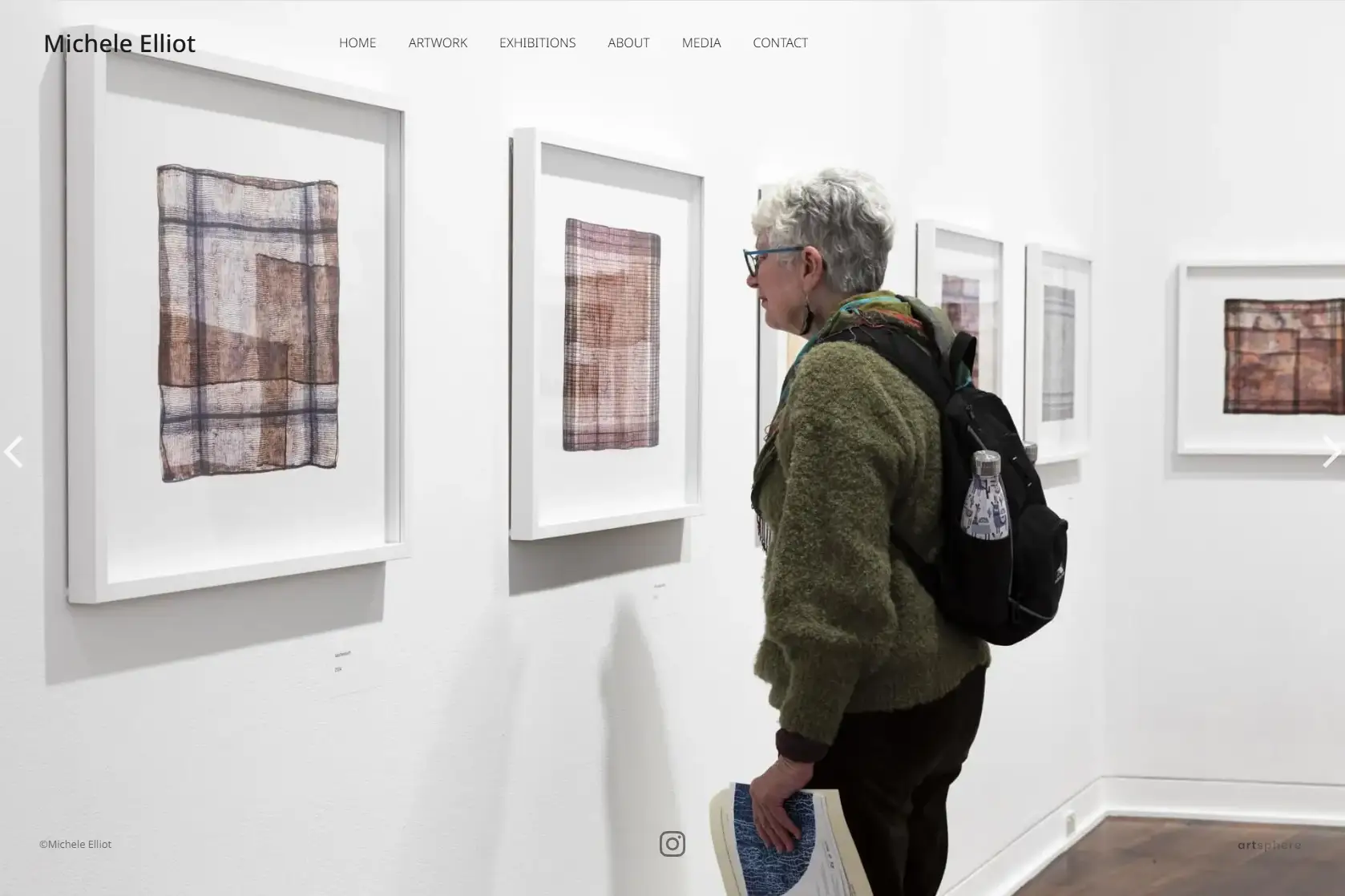
Why Every Artist Needs a Website?
"I've got Instagram — do I really need a website?"
We hear this question a lot, and it's a fair one. You're busy making work, social media is free, and building a website sounds like one more thing on an already long list. So let's answer it properly: yes, you need a website. Here's why — and why it matters more now than ever.
Because Collectors Will Google You
Here's the moment that decides more art sales than any other: someone sees your work — at a market, in a group show, on a friend's wall, in a scrolling feed — and they search your name.
What happens next is everything. If they find a professional website with your best work, your story, and a way to buy or get in touch, the interest has somewhere to go. If they find nothing, or a half-abandoned social profile, the moment quietly dies. You'll never know it happened — but it happens constantly. A website is how you catch the interest your art creates.
Because You Don't Own Your Social Media Audience
Instagram is a brilliant shop window, but it's a terrible shop — and it isn't yours. The algorithm decides who sees your posts, and reach can vanish overnight. Accounts get hacked, locked, or deleted, and every follower you've built goes with them.
Your website is the one place online you actually own. No algorithm stands between you and your visitors, no platform takes a cut, and no policy change can take it away. Social media is rented space; your website is bought land. Smart artists use the first to send people to the second.
Because It's Your 24/7 Gallery — With No Commission
A gallery show lasts a few weeks and takes 40–50% of every sale. Your website is open every hour of every day, to every country, and when a painting sells there, you keep the entire price.
That's not an argument against galleries — representation is wonderful, and the two work together. But between exhibitions, your work shouldn't be invisible. A website means your art is always on show, always for sale, and always working for you, even while you're asleep or in the studio.
Because Professionals Expect It
Curators reviewing proposals, galleries considering new artists, journalists writing features, interior designers sourcing work for a project — the first thing every one of them does is look for your website. For many, no website means no further conversation; it reads as "not yet serious," fairly or not.
A professional website — with a curated portfolio, an artist bio, and an up-to-date exhibition history — is the difference between looking like a hobbyist and looking like a working artist. It's your CV, your gallery, and your handshake, all in one place. It's also where opportunities land: almost every commission enquiry, licensing offer, and press request an artist receives arrives through their website's contact page.
Because It Builds Your Most Valuable Asset: Your Mailing List
Every email address on your list is worth real money. These are the people who already love your work — each one a future sale waiting for the right painting. And the place those email addresses get collected is your website.
A simple newsletter signup quietly builds an audience you own completely: collectors who want invitations to your shows and first look at new work. Ask established artists where their sales actually come from and the answer, again and again, is email. No website, no list. No list, and you're starting from zero with every new artwork.
Because You Control the Story
On a marketplace, your work sits in a grid next to ten thousand others, formatted exactly like everyone else's. On your own website, you decide everything: how the work is photographed and presented, how your story is told, what a visitor sees first. Your art is singular — the place people experience it online should be too.
"But I'm Not Technical" — You Don't Have to Be
The honest reason most artists put this off isn't doubt — it's dread. Wrestling with website builders, resizing images at midnight, fighting with fonts. Time in front of a screen is time away from the easel.
That's exactly why Artsphere exists. We build websites specifically for artists and galleries — portfolio, exhibitions, online sales, and newsletter tools all built in — and our Melbourne-based team sets the whole thing up for you. You make the art; we make it seen. Get started with your artist website today.
Be seen. Be collected. Be remembered.